Author Archives: admin

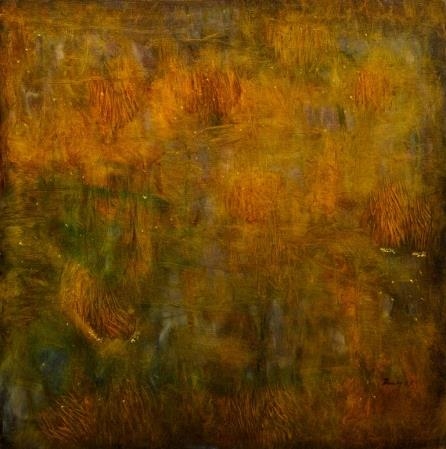
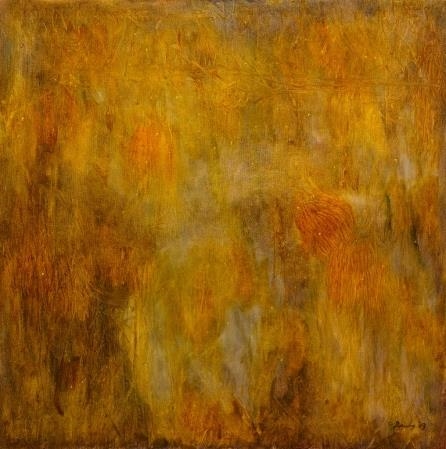
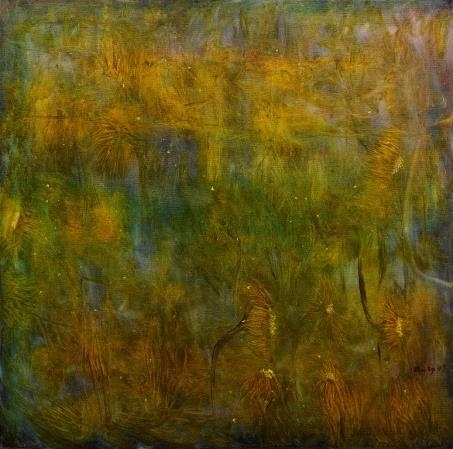
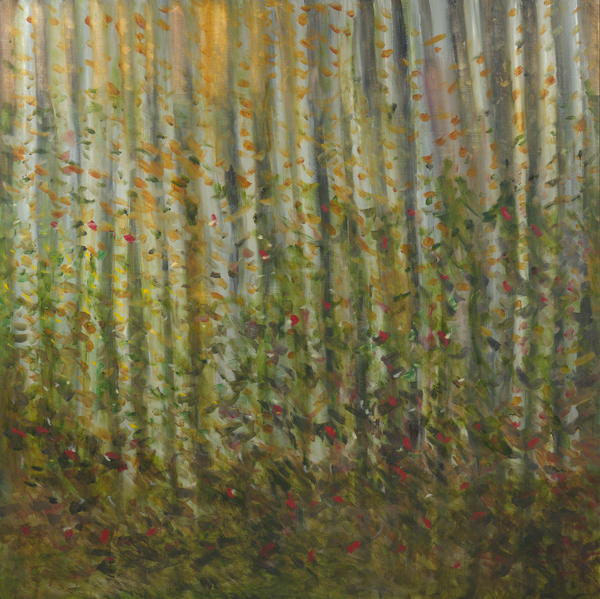
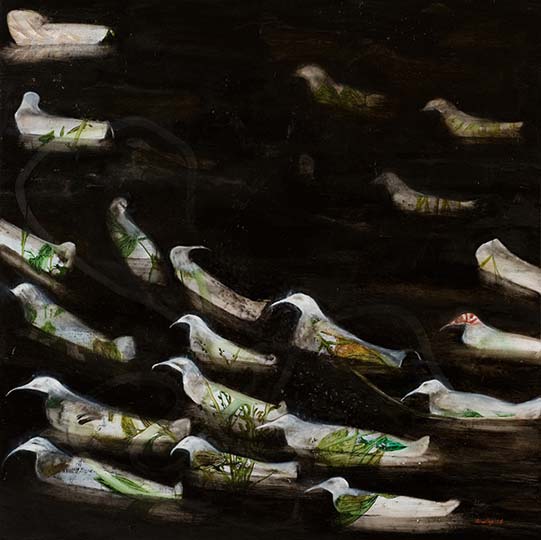
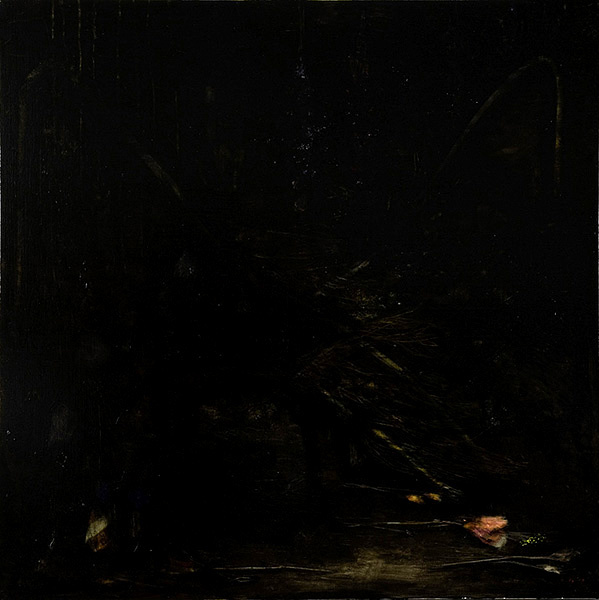
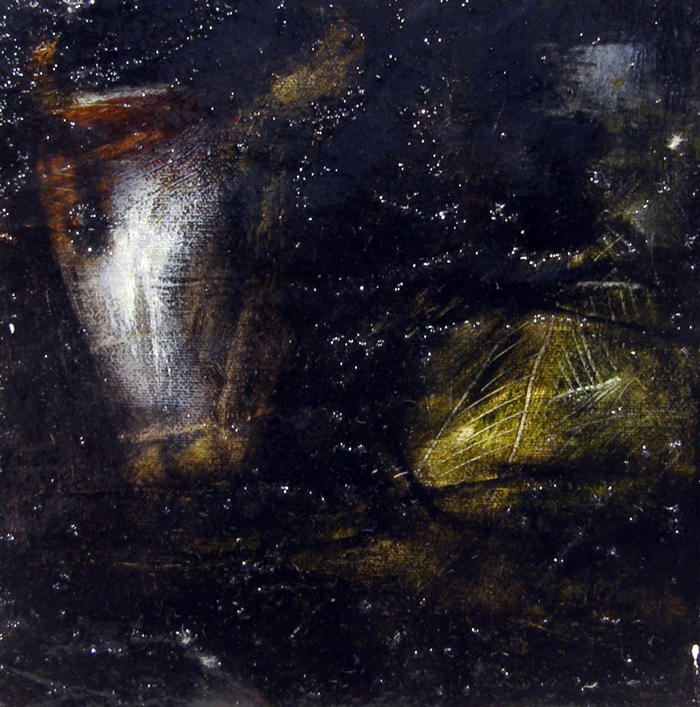
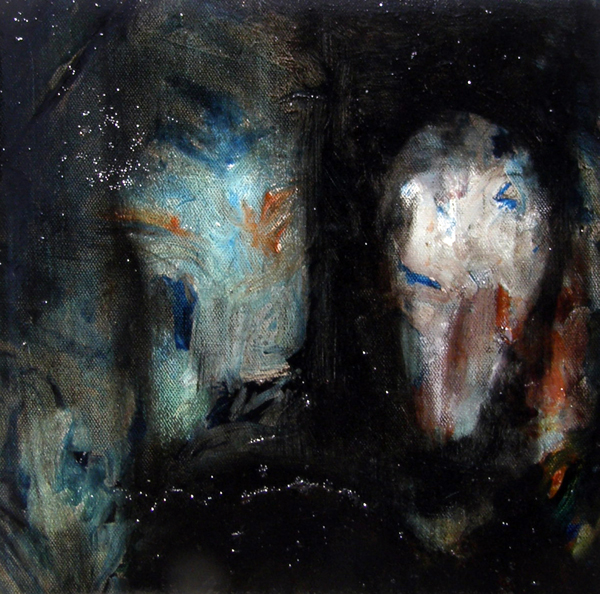
Monks by the Sea 2007 08

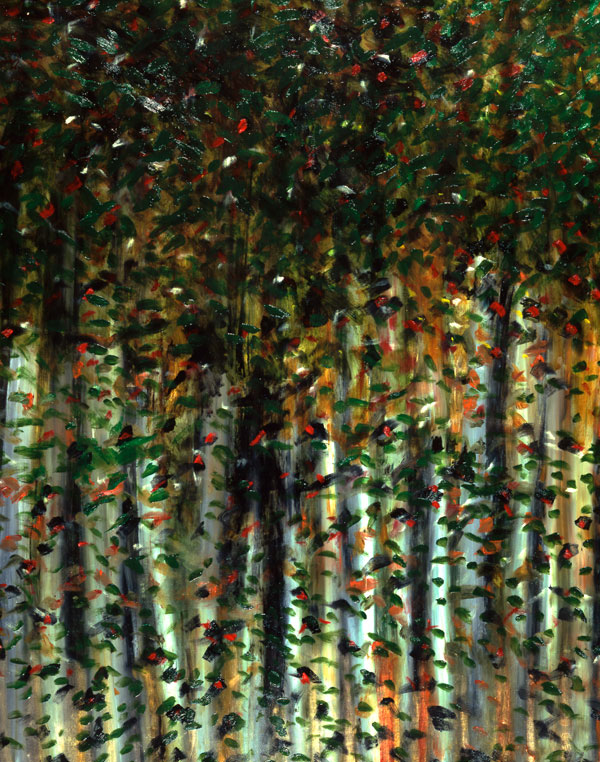
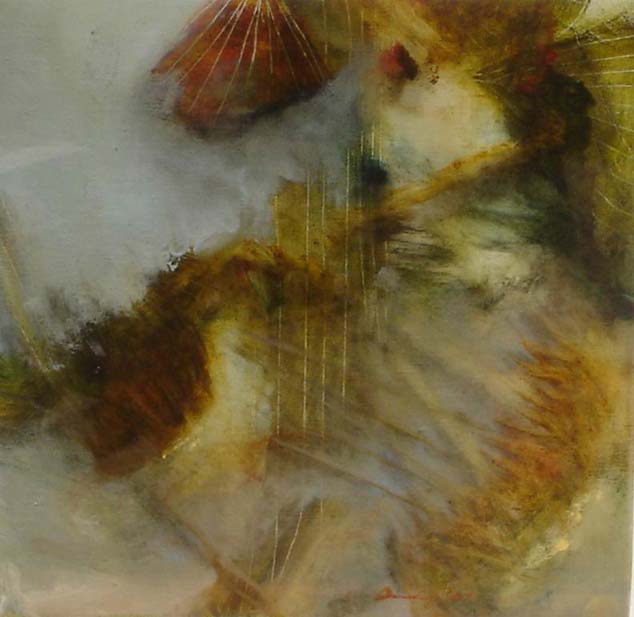
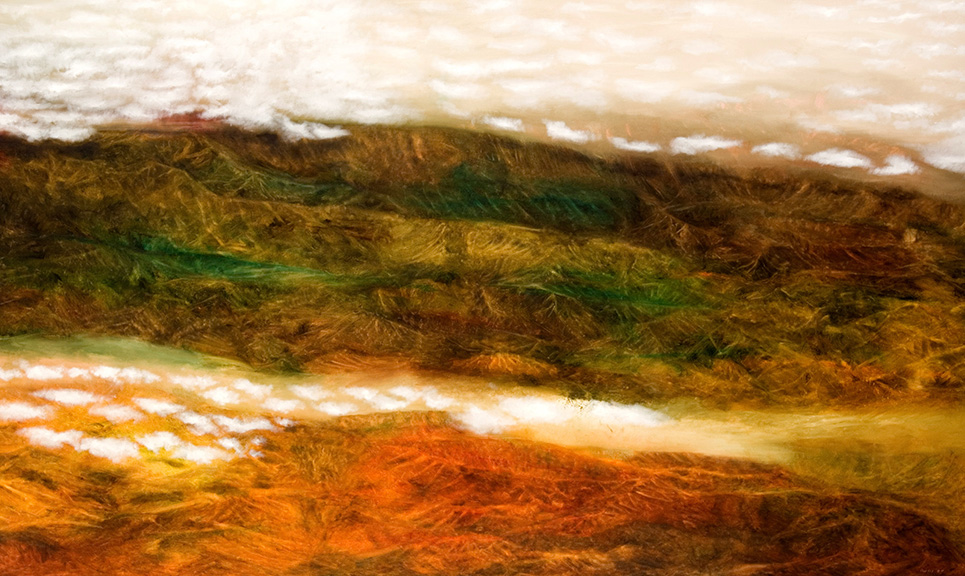
A move from inner-city Brisbane to coastal Sandringham prompted a memory of a great painting by the German Romantic genius, Caspar David Friedrich (1774-1840) and his masterpiece in the Kuntshaus Berlin, Monk by the Sea, featuring an individual observing the infinity of nature. In an appropriately romantic way, it was purchased at the urging of a teenage prince who thought it was the most beautiful painting he had encountered. I wanted to complete a series of my own versions of Monks by the Sea (not of me by the way, but mostly of darkly-cloaked fishermen on the rocks at dusk).” – Richard Dunlop, 2007

“The great philosophers of the 18th and 19th centuries (Kant, Rousseau, Hegel and Mill) intellectually fertilised the first wave of Romantic painting generated in England (which in turn gave permission for impressionists in Paris), and emphasised emotion and poetic introspection as rational responses to the overwhelming pace of technological and scientific change underway in Europe. The international, intellectual neo-Romantic painting movement which began at the turn of the twenty-first century (including artists like Doig, Kirkeby, Ghenie and me as paid-up members) was predictable given the backdrop of dramatic political, social and economic upheaval, and the threat of war, following the historical pattern established in the late nineteenth century.” – Richard Dunlop 2007

1991–1997

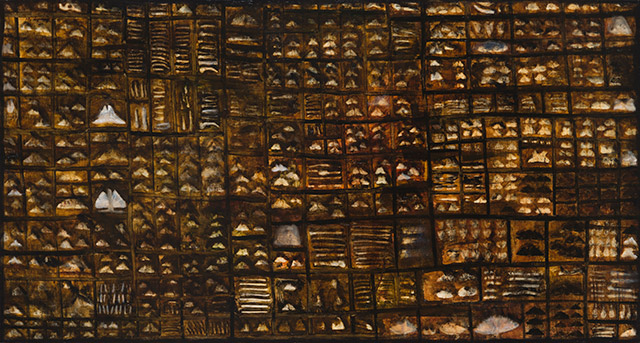
“In his exhibition, ‘Lung Capacity’, Dunlop assembled literally hundreds of small canvasses in strict rows. Some of them were placed in an arbitrary sequence, while other small groupings were composed of very carefully placed sets of small painted works. Upon reflection the viewer had a sense of being surrounded and overwhelmed by the works. The gallery became the artist’s territory which is no mean feat at the best of times. Here the work owns the walls on which it is placed. The eye makes its own connections from one piece to the next and endless variations arise – endless possibilities occur.” – John Nelson

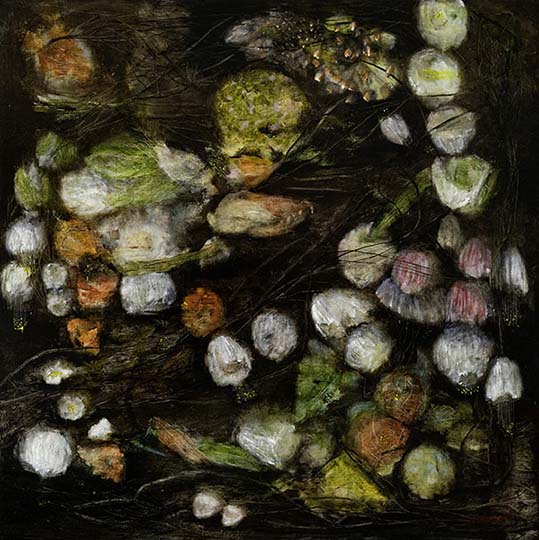
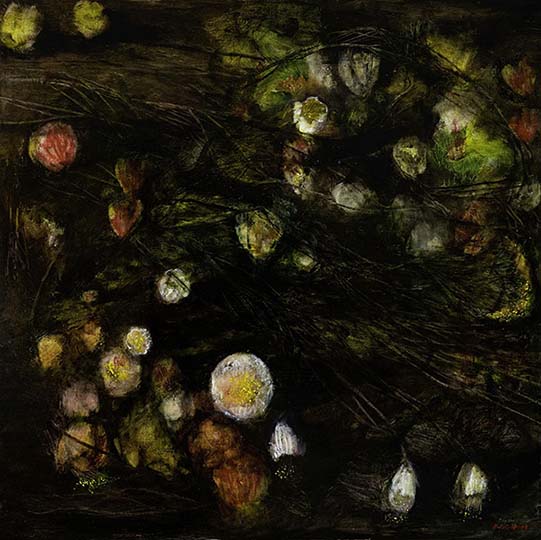
“I’ve just purchased Richard’s Night Garden: Rising Damp and the Promise of New Growth. It’s as powerful and brooding a painting as anything I’ve seen at any Biennale.” – Louise Mitchell, Director, Artspace, The Gunnery, 1997

Dunlop’s painting has always been intelligent and it has always had significant content. The viewer has to work harder to unearth his meaning. In their derivation and method, these are highly introspective images.” – Michael Richards, 1991

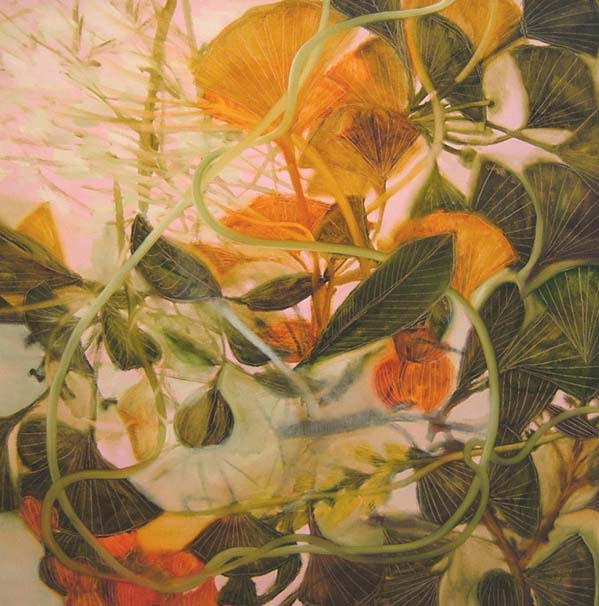
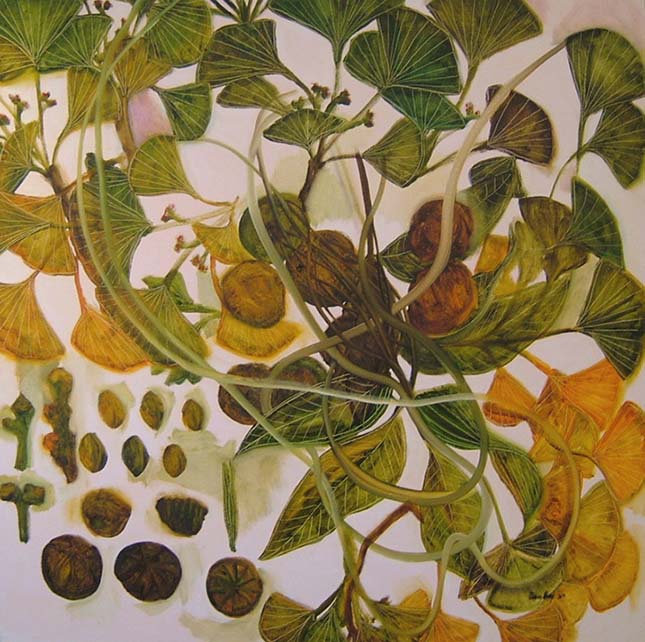
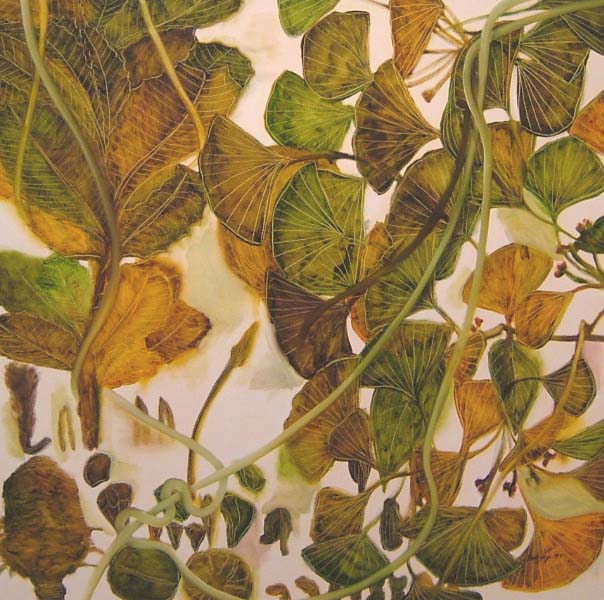
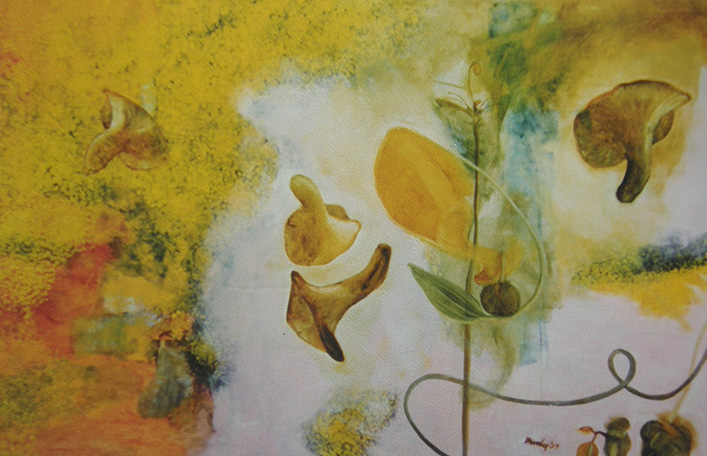
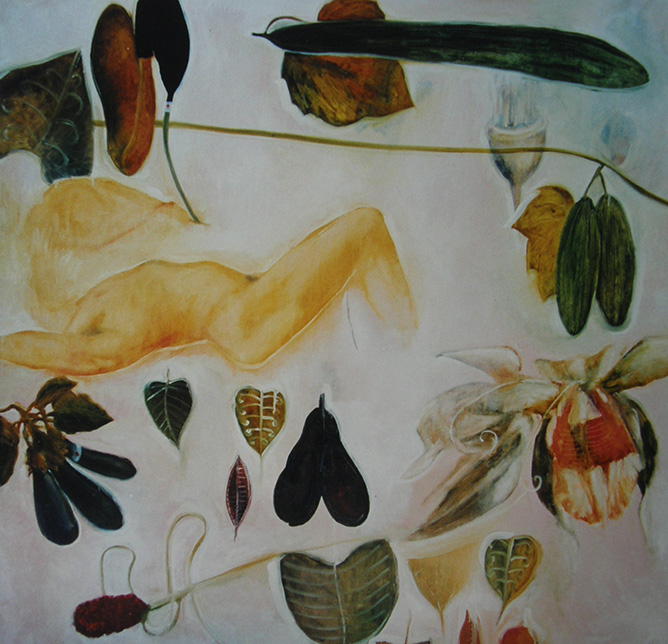
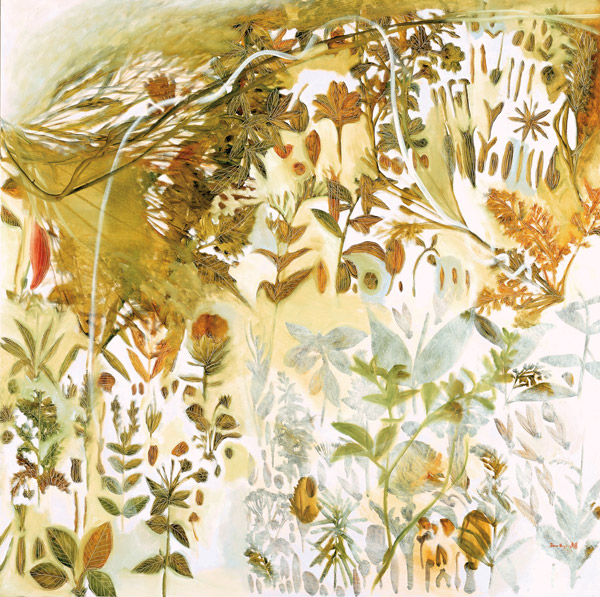
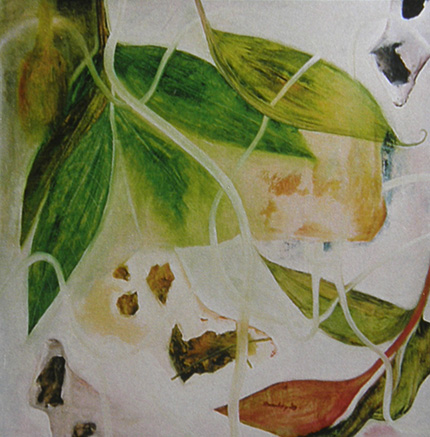
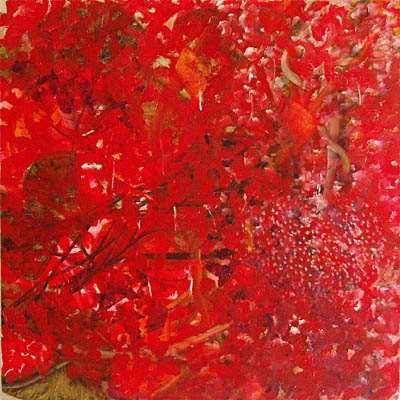
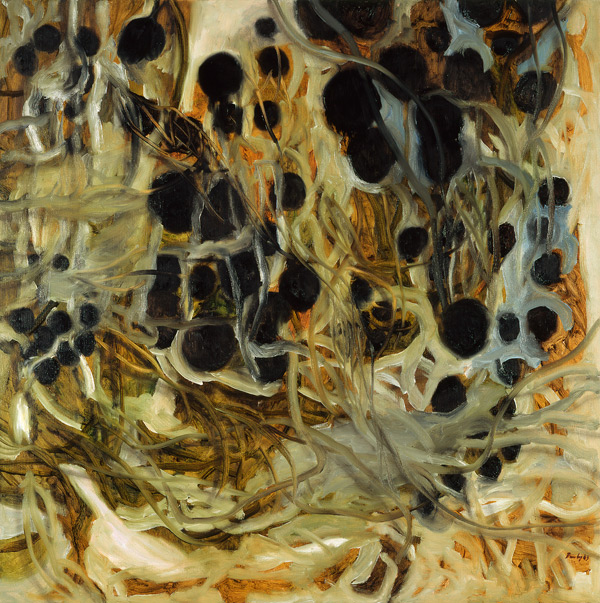
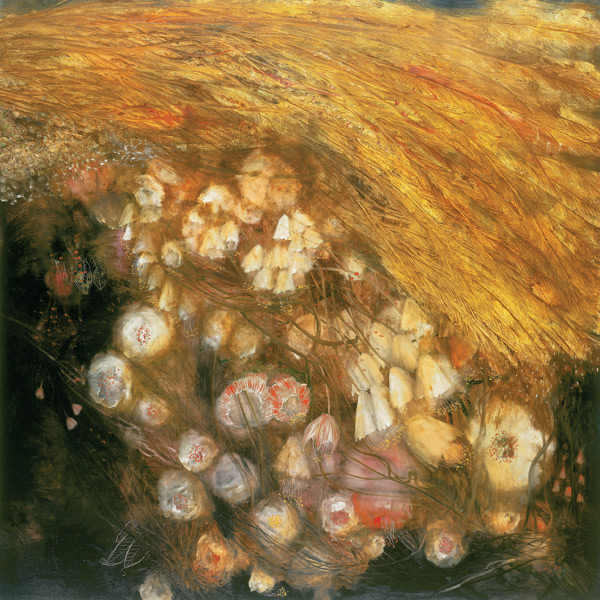
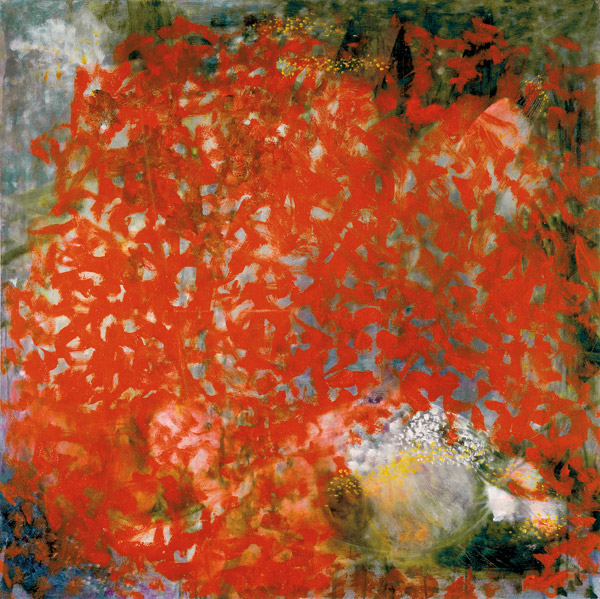
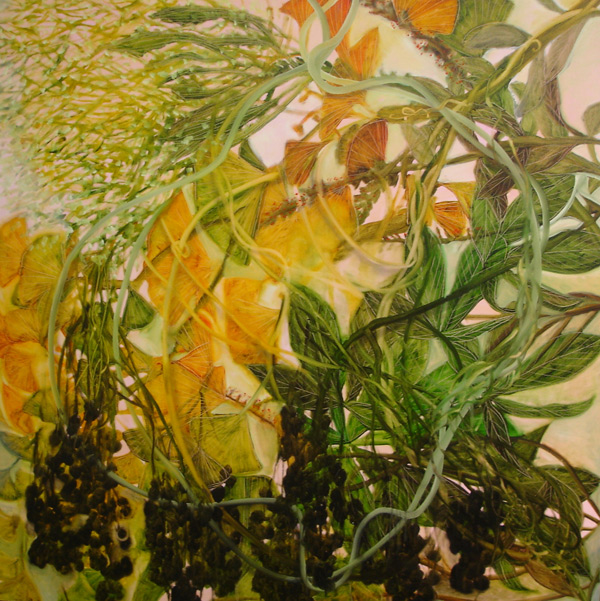
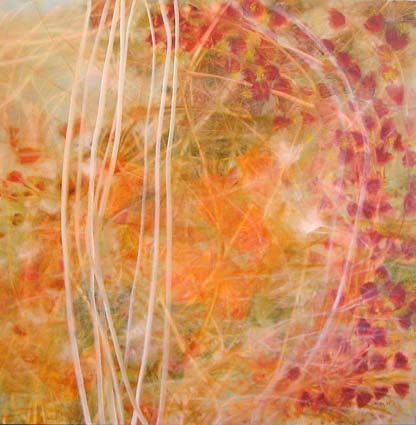
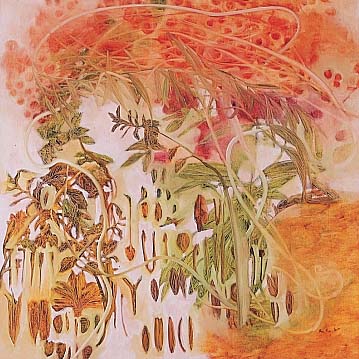
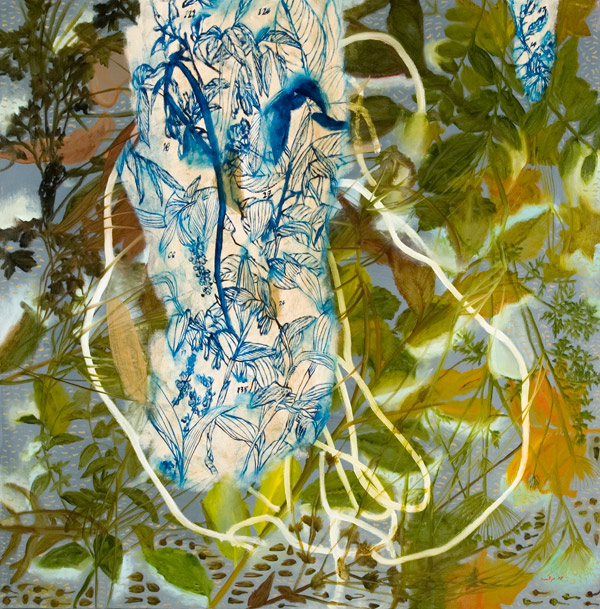
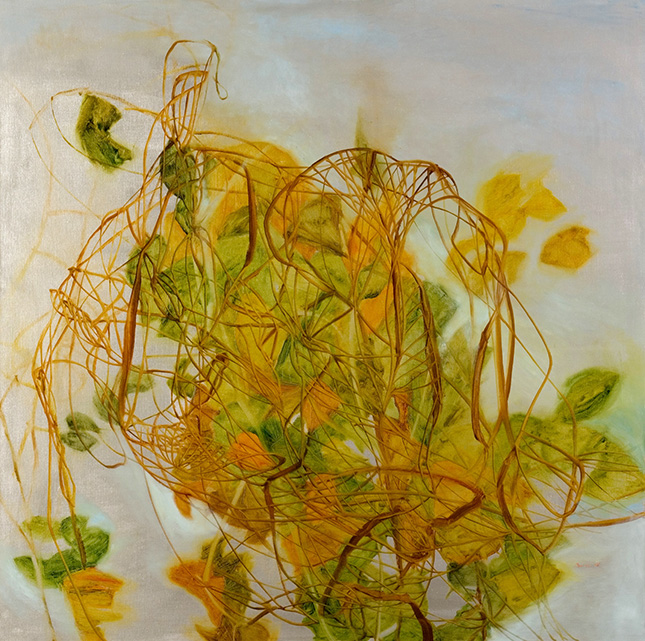
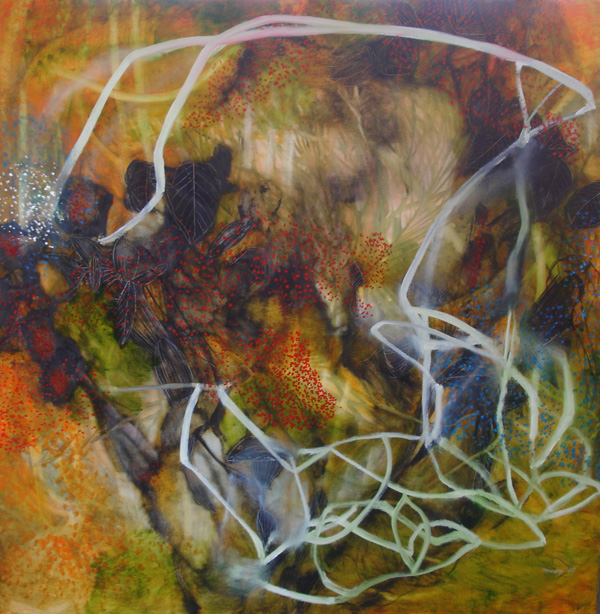
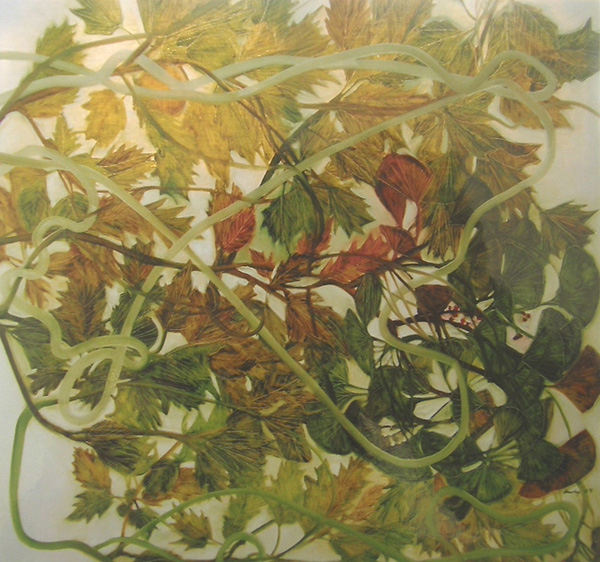
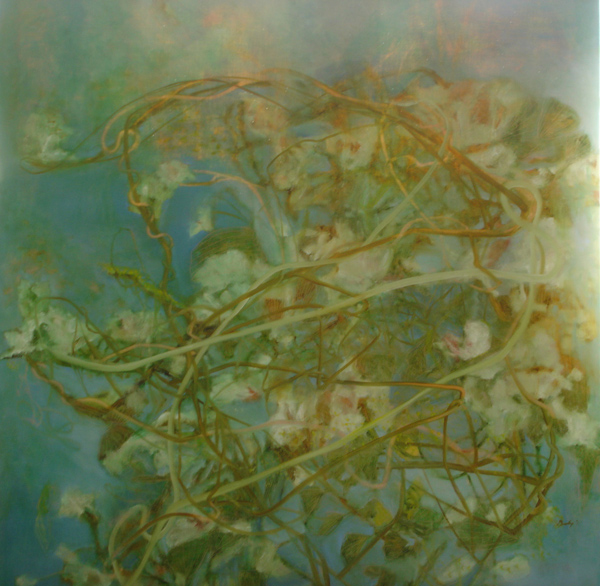
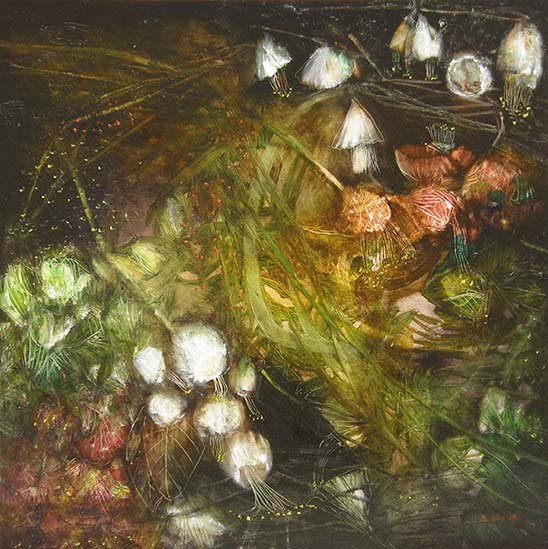
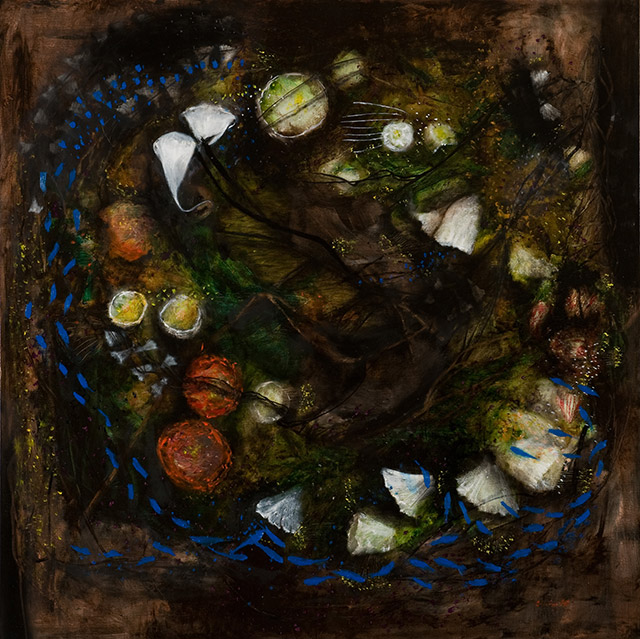
Richard Dunlop uses the domestic garden as an image for the interplay between the human impulse for orderly processes of control and classification, and nature’s inherently disorderly processes of development through trial and error. There are real species, contrived species, ambivalent species such as carnivorous plants, and ambiguous organisms whereby the evolutionary decision to be plant or animal has not yet been taken; all are linked together through networks of vines and tendrils which both connect and entrap.” – Leonie Stanford, 1996

“The gardener is someone who paints with forms. The excellent form produces a harmony of the faculties, which prompts us to label the garden beautiful.” – Emmanuel Kant

“To paint one must be alone. I cannot become involved with people. I paint for myself and have no sense of mission, nor do I feel any compulsion to communicate, though naturally I am pleased when it seems I have done so.” – Ian Fairweather
1998

“I thoroughly enjoyed Richard Dunlop’s recent exhibition at your gallery. Dunlop’s growing achievement interpreting landscape has no real parallel among the work of his contemporaries, dealing as it appears to do with the stubbornly unfashionable subject of natural beauty converging subtly with environmental and broader moral concerns. I think his work will survive beyond the current fixation with the passing parade of narcissistic identity politics in which some artists opportunistically see a parade coming down the street and jump out in front. If anyone needed reminding of my favourite Keats quote “Beauty is truth, truth beauty – that is all ye know on earth, and all ye need to know.” – Professor Bernard Smith 1998

“Everything is collapsing and transforming deep inside the picture” – Per Kirkeby, 1998

“You make it look so easy” – Del Kathryn Barton, 1998

 “Painting is dead’’ – Paul Delaroche 1839 (long dead)

“My father was a bit of a beatnik and his favourite topic, almost his only topic, was the idea of the mind as a country you could develop, and develop, and build and build. My mother believed in the country of the heart. For me it’s the hand.” – Patti Smith
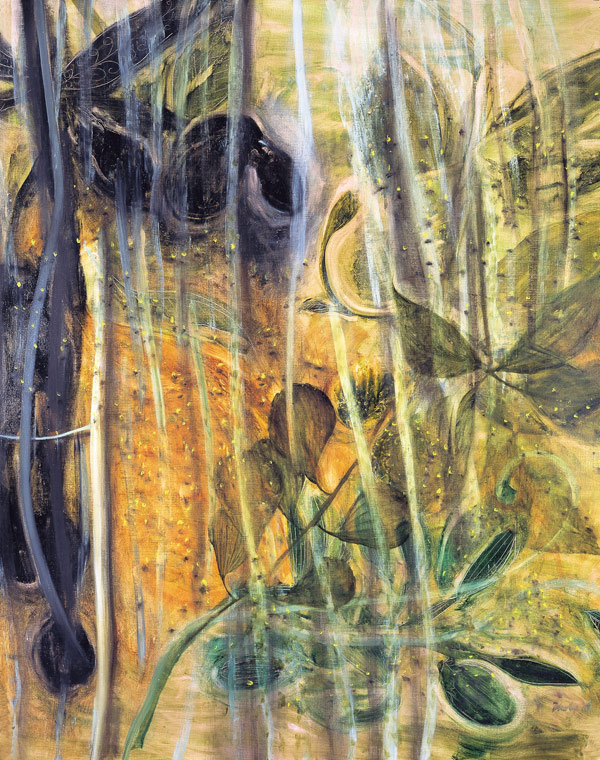
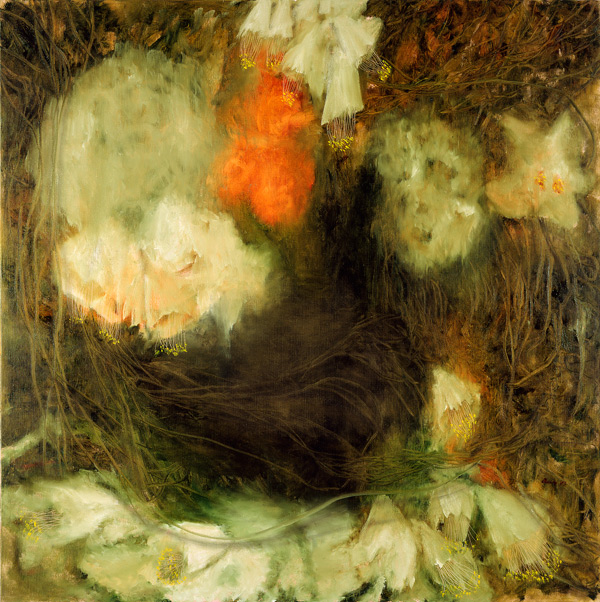
“Drawing is taking a line for a walk” – Paul Klee

2001

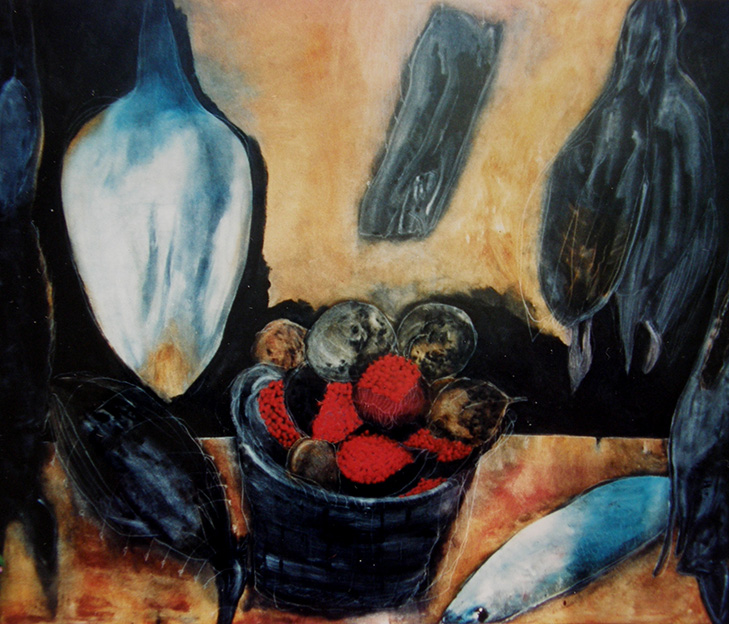
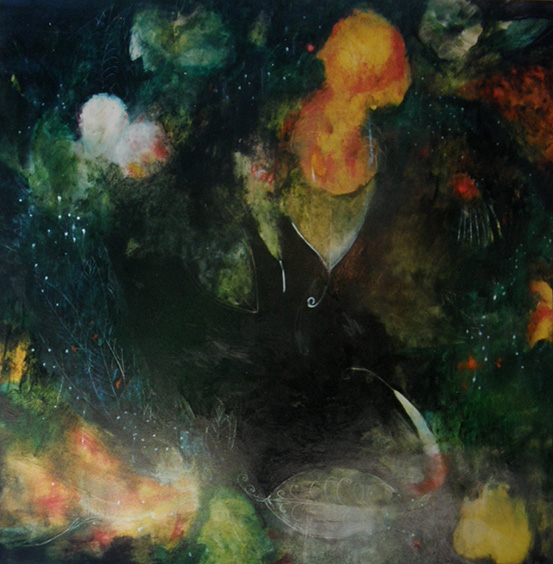
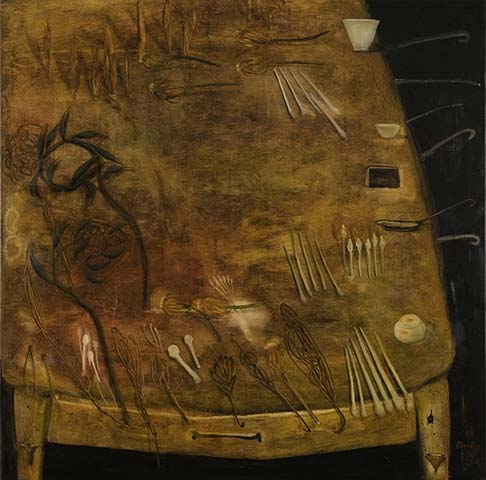
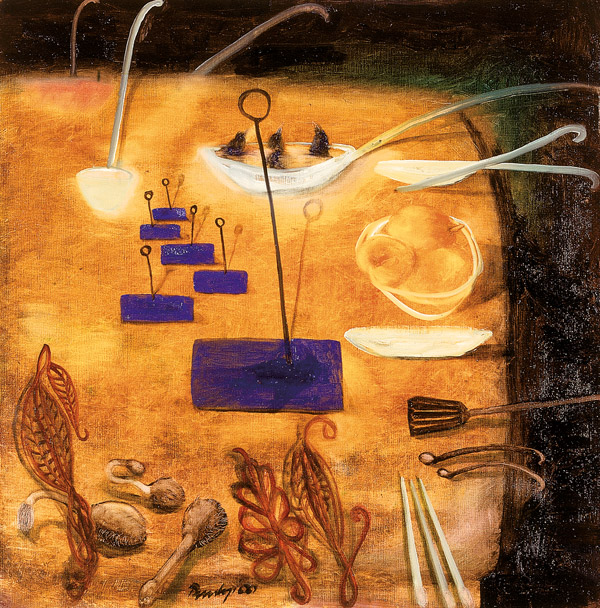
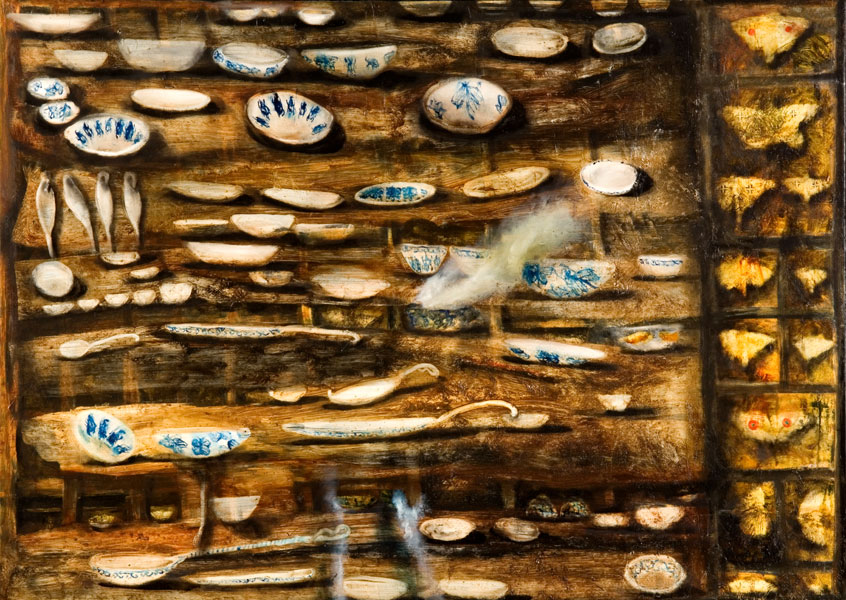
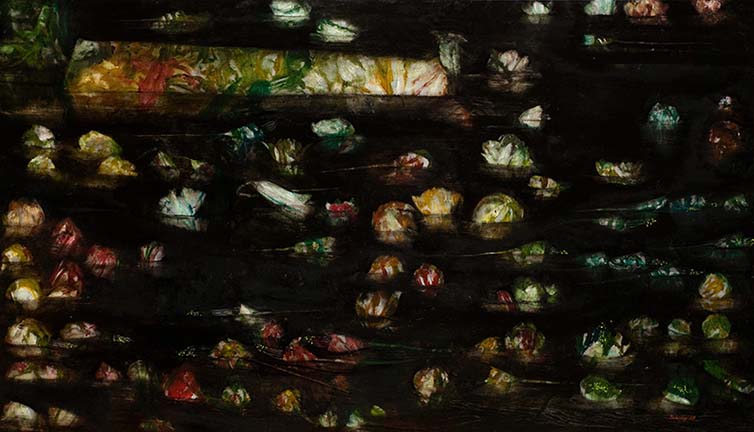
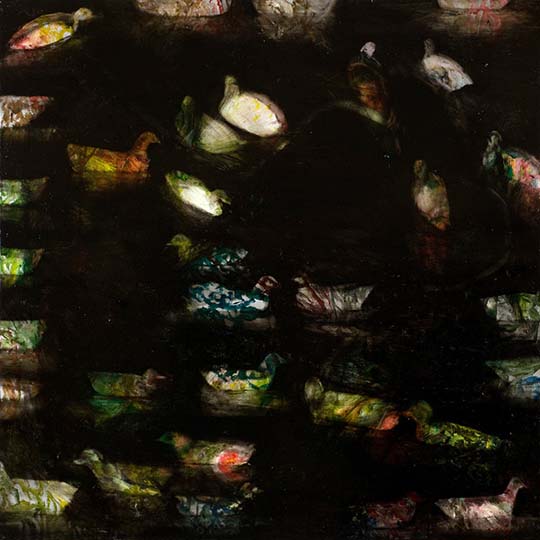
If on the one hand Dunlop’s paintings are essentially handsomely composed planes of colour on canvas, on another, some of his works in the present show are as psychologically charged as a visionary landscape by Giorgio de Chirico or Yves Tanguy. Time and space have little reality in paintings which present almost surreal associations of images and ideas. Children’s toys, fish, vegetables, birds and kitchen utensils, the artist’s paintbrushes and the art works of friends and strangers, are all presented rising elusively from nebulous surrounds. These objects are spread before us as if in a land of dreams. – Sue Smith, 2001

“How can art keep you involved for 40 years? If it means something… Something quite new and authentic was flowering and you happened to be holding the hose… What price can you place on that?” – Ray Hughes 2001

“Don’t plant your bad days. They grow into weeks. The weeks grow and turn into months. Before you know it, you’ve got yourself a bad year.” – Tom Waits

“A cultured hand.” – Robert Hughes, 2001

“I see my life as entering and exiting a series of theatres. The ocean is a theatre, my studio is a theatre and my kitchen is a theatre filled with drama and intimacy and chaos. My input is found in these everyday theatres.” – James Drinkwater, 2019

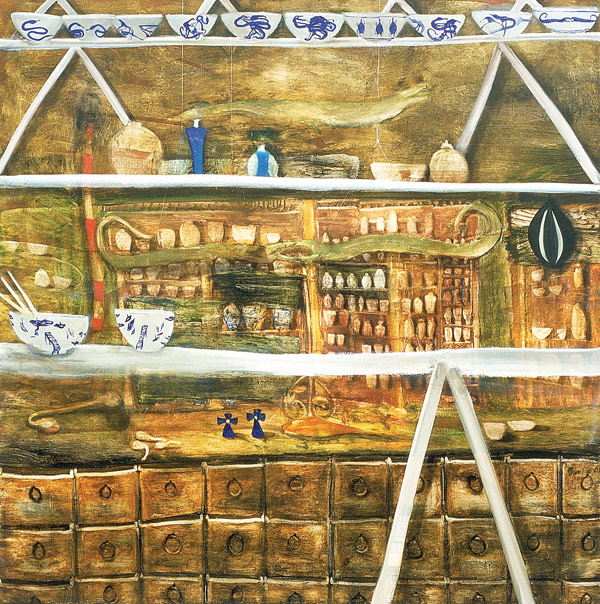
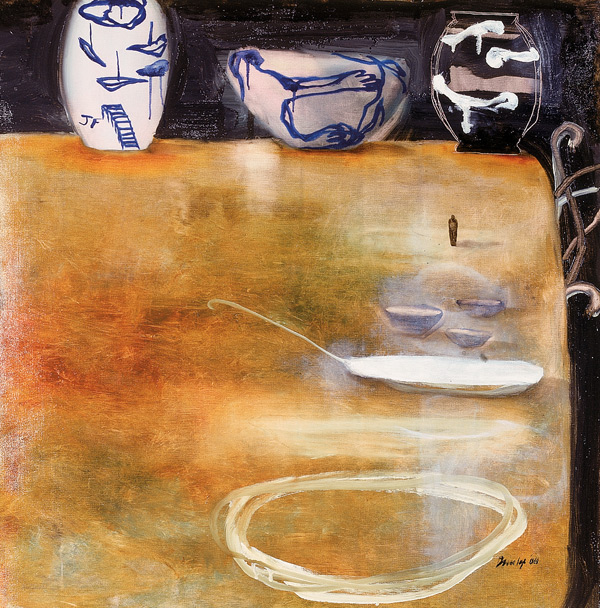
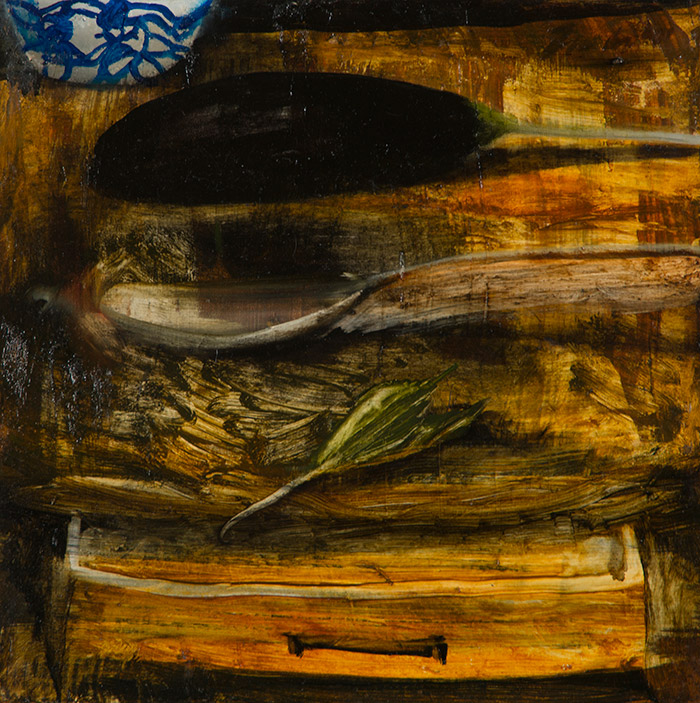
“Dunlop’s work stands up well with a wide range of artists whose work resonates with his own free colourist style – from the sensuous, decorative painting of Matisse, William Scott and Brett Whiteley to the roughly applied brushstrokes of Philip Guston and Alberto Burri; from the playful wandering line of Paul Klee to the carefully modulated forms and inky backgrounds of Modigliani. Dunlop’s works range from claustrophobic biospheres of beautiful and menacing animals and plants to images of barren, dusty vistas containing vessels, utensils and art objects which emerge mysteriously from kitchen tables that morph into cabinets.”  Sue Smith

2003

Dunlop strives for timelessness with his art. Each work resists periodisation by virtue of the sensation that its own image may not even belong to this or any other world; may exist above all for itself, or that its secrets will not be revealed lightly. Beyond the window of these paintings is a plane of consistency, where the one constant is the artist’s idiosyncratic coding of the infinite – light years away in our own back yard.” – Gilbert Meadowcroft, 2003
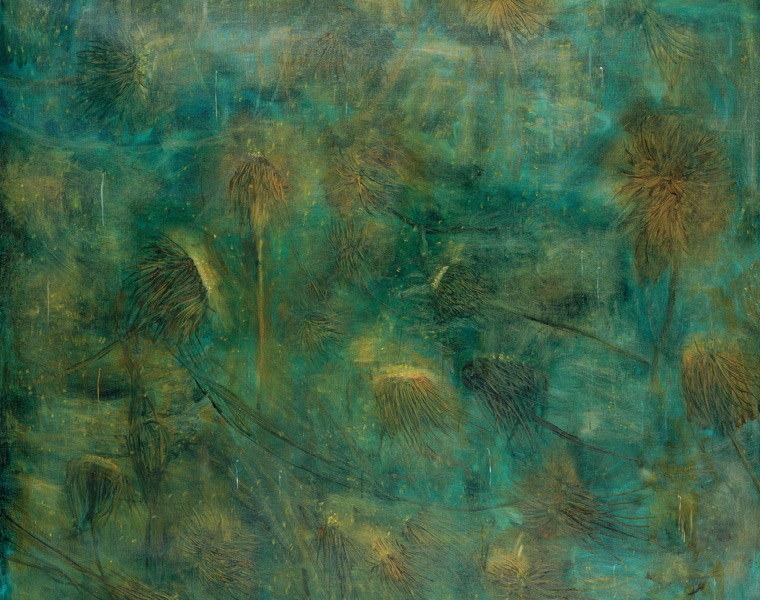
“Gardens are the perfect intersection of nature and culture; a form of architecture posing as nature.” – Richard Dunlop

2004

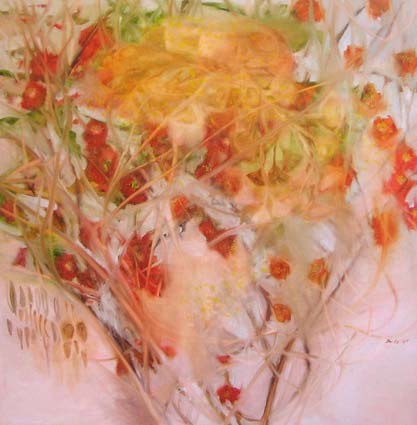
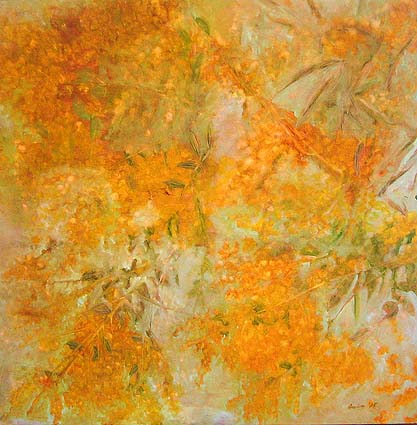
“Richard Dunlop is a contemporary Australian painter with a strong commitment to pursuing his own line of investigation. Working in long cycles spanning several years, he experiments with evolving theatres of imagery, using his formidable technical skills to tease out the visual and metaphorical nuances of forms and spaces. This results in luscious, fluid, evocative works that defy simple analysis. These paintings are clearly inventions, created at a remove from the actual specimens or locations, and yet they have the capacity to confound the viewer’s eye with a sense of familiarity and naturalness.” – Professor Mostyn Bramley-Moore, 2004
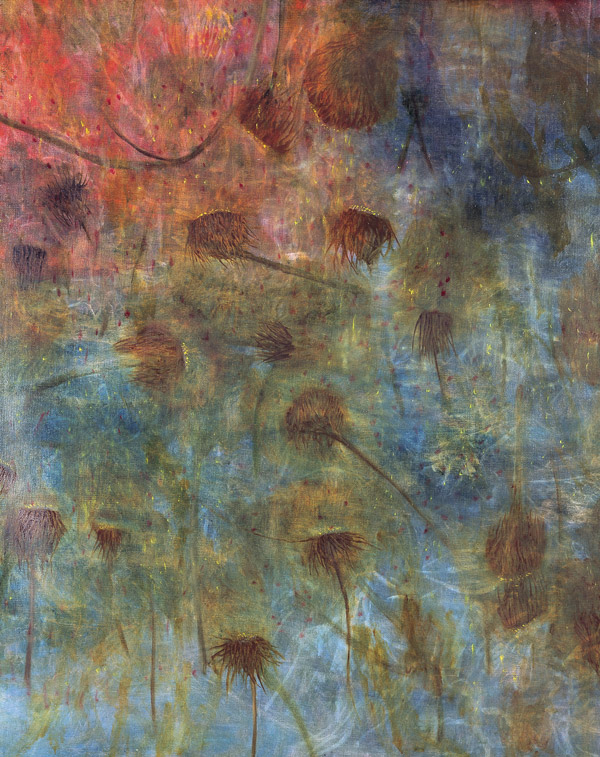
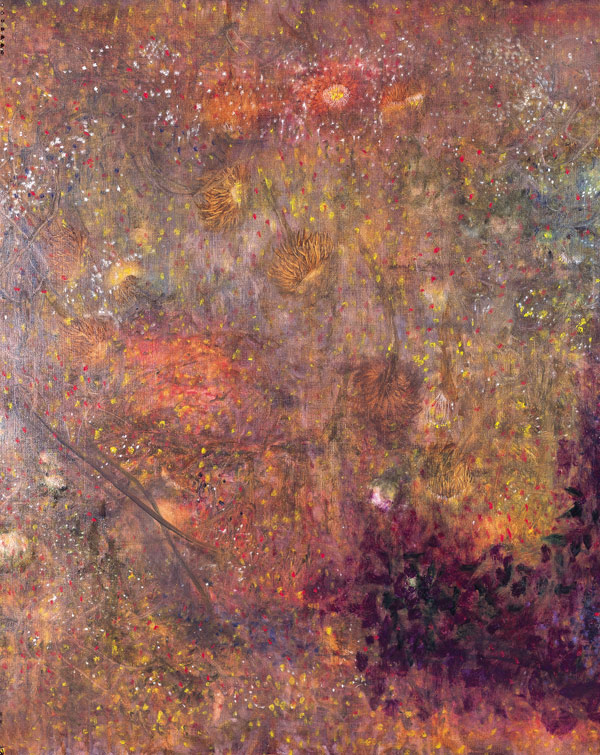
“Everything I know about how the art industry works I learnt not from art school but from talking to you for hours when your exhibitions were on in Sydney at Ray Hughes Gallery.” Ben Quilty 2004

2005

Lyrical painter and philosophical dreamer, Richard Dunlop selects from his everyday environment particular objects, places and situations that intrigue him visually and that also carry the possibilities of symbolism. One is aware that the eye is always a motivating, controlling factor in Dunlop’s work. The visual excitement that the materials and elements of painting – gestural line, glowing colour and sumptuous surfaces – may directly express in them is, as he says, the integral issue in his art. The indivisibility of colour, space and gesture is stressed in each of his pictures and when they are seen in series, as in this exhibition, this feeling of interconnectedness increases, linking the paintings one to the other and creating an overall sense of the artist’s organic process.” – Sue Smith, 2005
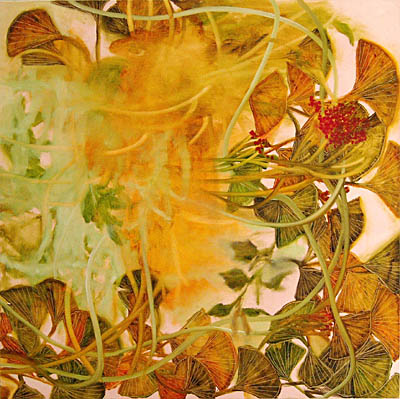
“It is not a photographic space. It is a memory space, but one which is based on reality.” – Peter Doig, 2005

“Richard uses ancient glazing techniques to subtly expand the pictorial possibilities, and to be really open to what is going on within the abstraction of the picture plane. He comes up with all sorts of strange colour combinations you couldn’t possibly dream of in advance or even mix on a palette, because it has to happen within the chemical interaction of the glazes and the action of painting itself. It has to be done on the run, a dance with chance.”Stephen Lees

2006

Richard Dunlop’s multi-layered paintings present themselves from several perspectives simultaneously. This skewing of perspective brings to mind, among other greats in Australian landscape painting, William Robinson and John Olsen, while repeated motifs seem to nod at the brilliance of Australia’s best indigenous painters. The Zen principles of Wabi/ Sabi are in abundant evidence. – Iain Dawson, 2006 
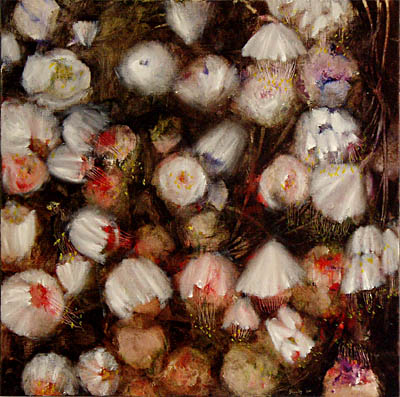
2007

Richard’s work exhibits a concentrated approach to developing an art practice, sustained over a long period. He has consistently carved a unique niche for his work – his painting practice contributes significantly to ongoing dialogues and discussions relevant to contemporary painting although he doesn’t subscribe to any one existing style or theoretical framework. He has developed a unique style while continuing to experiment and extend the boundaries of his own practice. If anything, Richard’s practice is innovative by virtue of its singular focus.” – Alison Kubler, 2007 
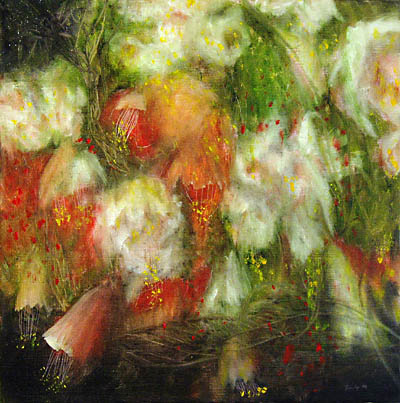
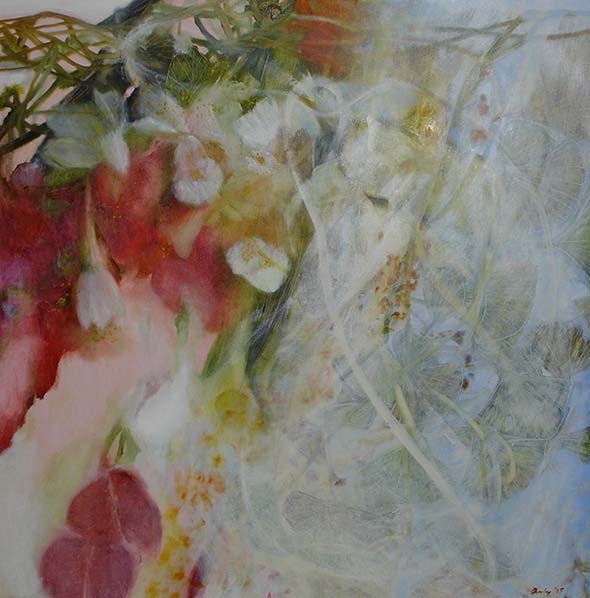
“Richard Dunlop’s multi-layered paintings present themselves from several perspectives simultaneously. Capturing the true beauty of organic chaos, Dunlop’s canvas could be painted from within, above or as a magnification of his beloved Australian natives. The skewing of perspective brings to mind, among other greats of Australian landscape painting, William Robinson and John Olsen, while repeated motifs seem to nod at the brilliance of Australia’s best indigenous artists.” – Iain Dawson (Tim Olsen Gallery Catalogue Essay) 2007

“Dunlop draws fresh attention to the overlooked and mundane while exploring themes of opulence, death, transcience, decadent excess and that most maligned and elusive quality, beauty. Undoubtedly, painting and beauty are both here to stay. Dunlop deals with these issues but he is clearly neither a slave to the past or present like the artists he admires, Ian Fairweather, Per Kirkeby, Neo Rauch, Morandi and Titian, for example.” – Professor Mostyn Bramley-Moore

“Unlike many artists who achieve early success, he did not settle into a safe, carefully constructed
manner that invited approval. He kept up the risk, the restlessness, the search for transcendence.”
Sebastian Smee 2007

“For Queensland Police to find that a professional artist has a garage full of paintings is the equivalent of discovering that a farmer has a shed full of chickens.” – ABC National News

2008


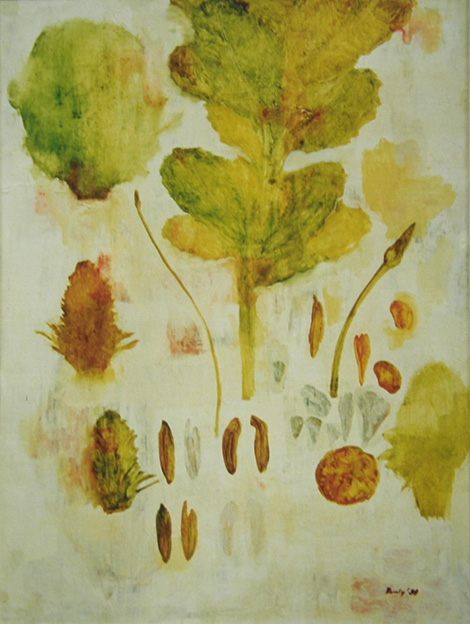
Richard Dunlop is, at heart, a well-travelled rebel. This is best reflected in his art practice, as he believes “the act of making paintings involves balancing risk-taking with experience”. Dunlop first began taking these risks within his art practice in the mid-1980s – though considerably less experienced – when he “started blurring the interrupted traditions of botanical illustration, landscape and still life with the then moribund tradition of painting”. As he explains, “no-one else to my knowledge was doing it because every element of it was downright taboo, and collectively almost heretical…” – Eric Nash, Curator

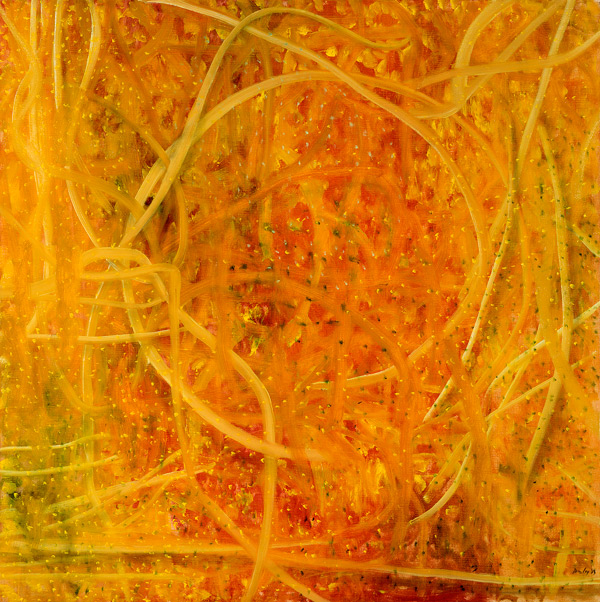
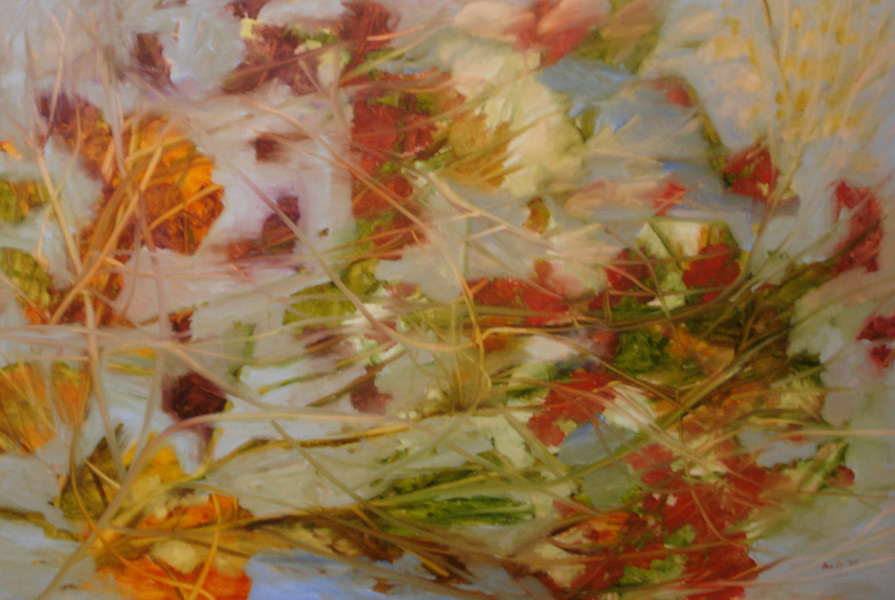
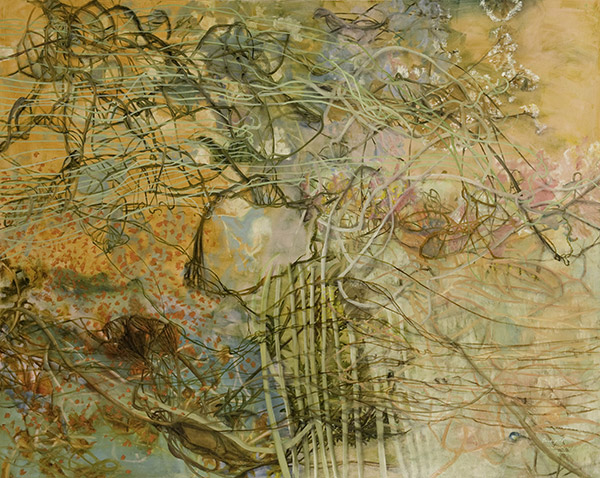
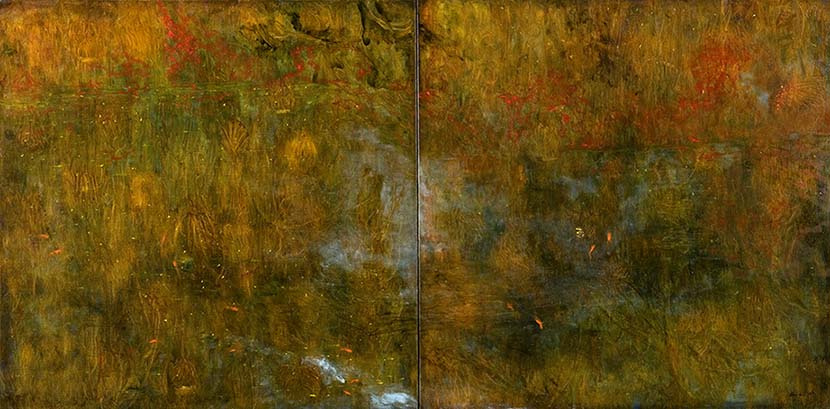
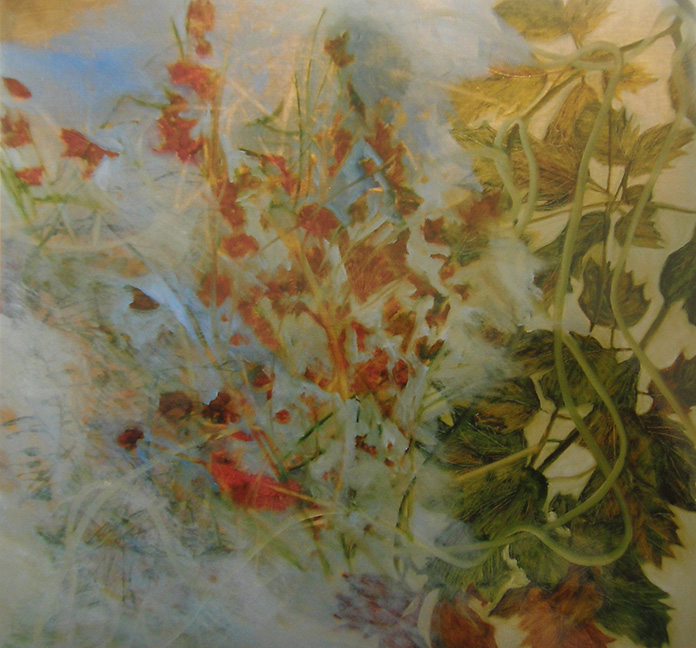
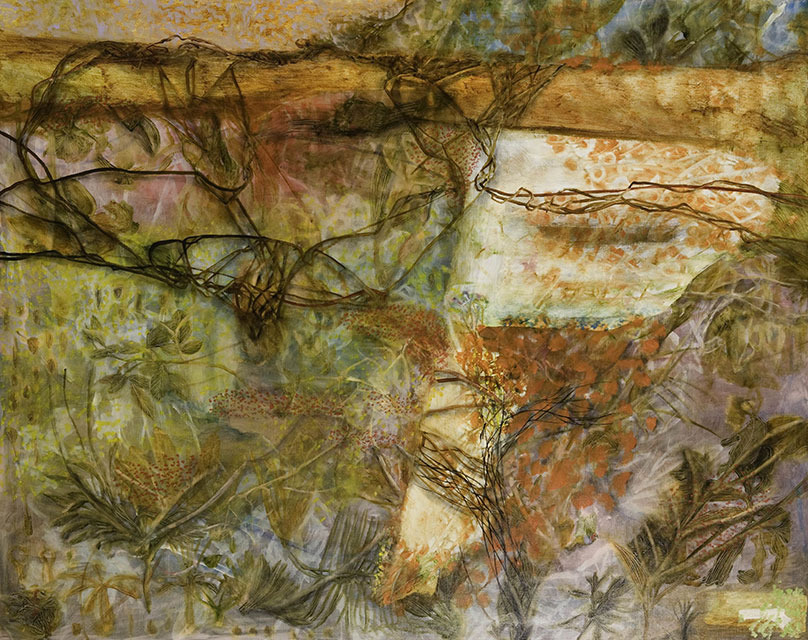
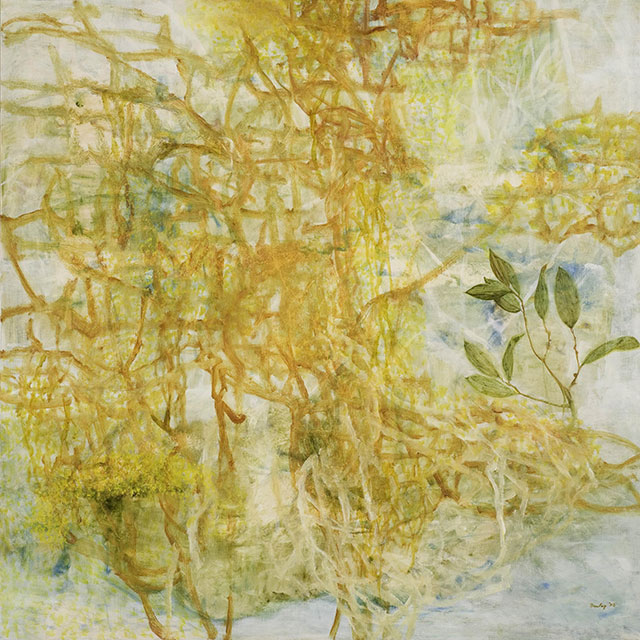
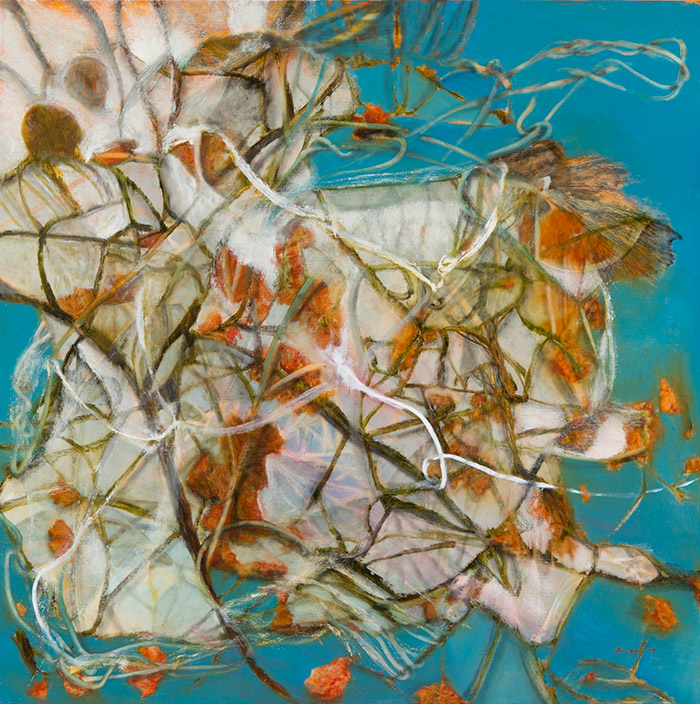
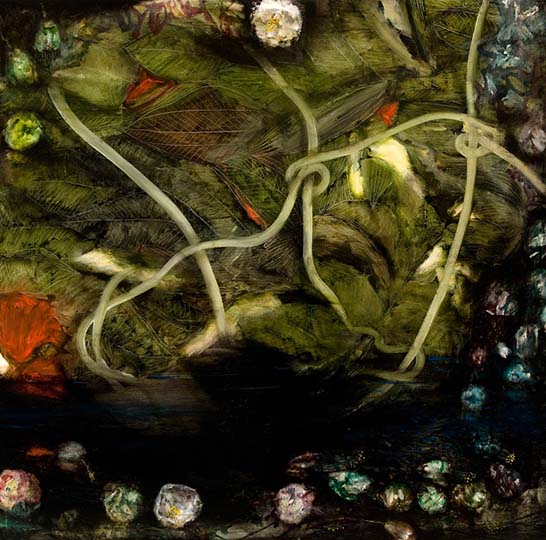
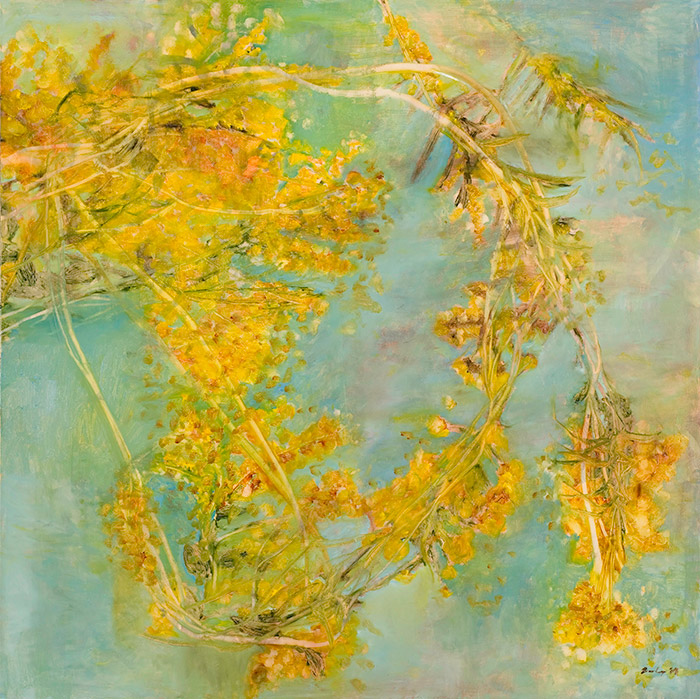
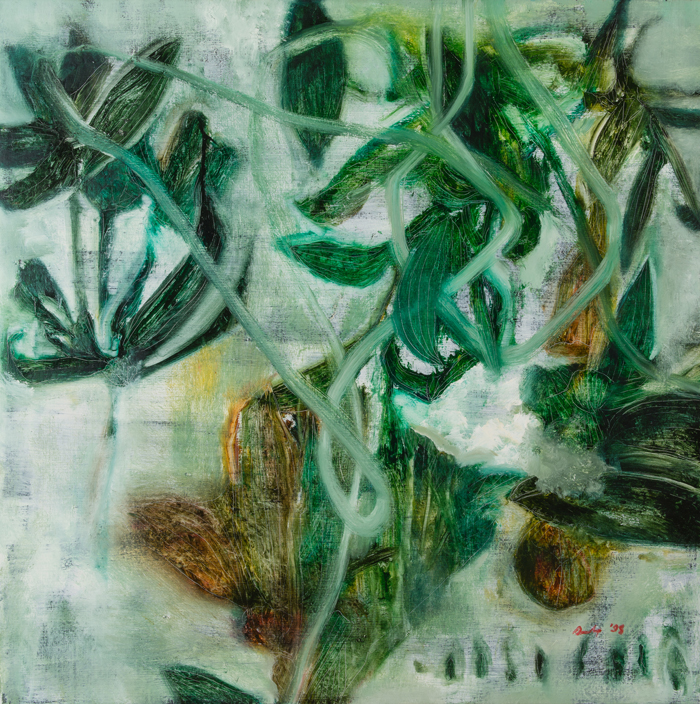
In Rainforest and Mangrove (After Fairweather) (both 2008), plant and water forms are elaborated across the painting’s surface, abandoning the logic of a perspectival scene for a meandering brocade of natural forms. Dunlop is aware of the historical weight of painting yet also believes in an essential spontaneity in the studio. “My interest is in the process of painting, with each painting a fresh undertaking, he says. “In the end, paintings make their own reasons for being of any interest over time, both individually and collectively. That’s how they maintain a pictorial freshness.” – Sheridan Hart

“One of our best mark-makers …removes the facts and stuffs the heartfelt painterly gestures in the
spaces left open, like an accomplished surgeon.”John McDonald

“I get some of my best ideas about gardening while I’m painting, and some of my best ideas for
painting while gardening.”Richard Dunlop